
- Globally, 1 in 3 women have been victims of physical or sexual violence by an intimate partner; sexual violence outside of a partnership; or both, at least once in their lifetime.”
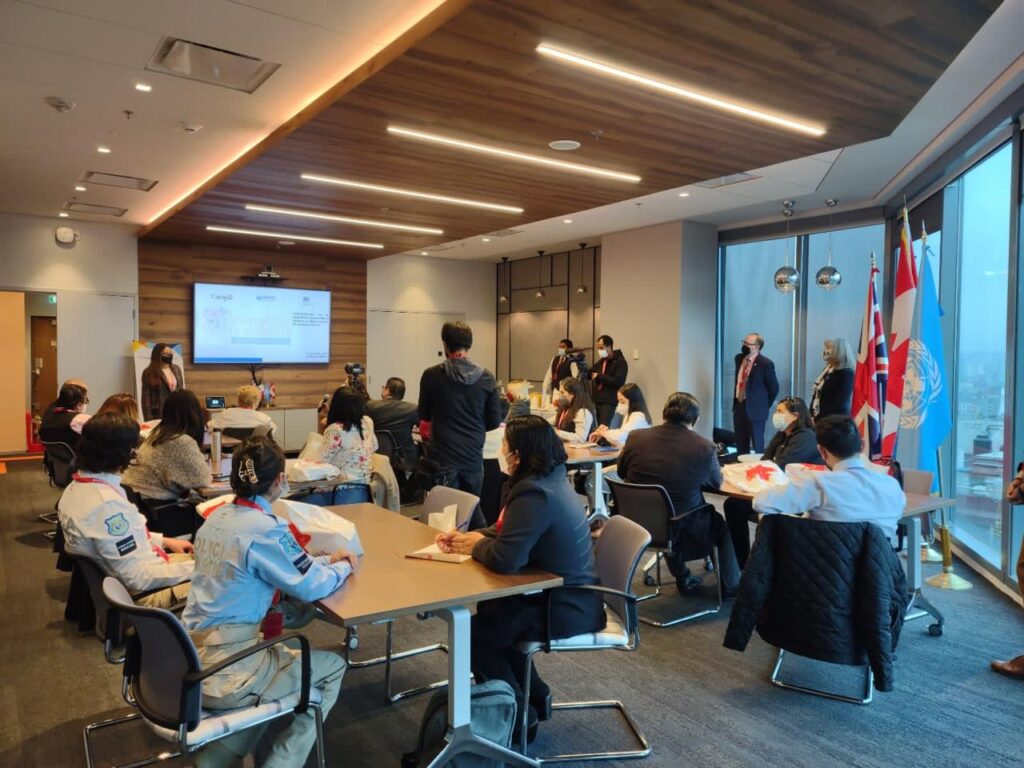
Mexico City, November 24, 2025 — On the occasion of the International Day for the Elimination of Violence Against Women and in view of the FIFA World Cup 2026, the Embassies of Canada and the United Kingdom in Mexico and the United Nations Office on Drugs and Crime (UNODC) announced that, through their initiative “Let’s Overcome Violence, let’s change for them” they will implement actions to address the risks of sexual violence and other forms of gender-based violence during the tournament.
Major sporting events represent spaces for celebration, diversity, and gathering; however, due to the high influx of tourists, they also increase the risks of gender-based violence against women and girls.
As part of the initiative’s activities to prevent and address these crimes, a specialized training workshop will be launched in Mexico City in February 2026. This workshop will strengthen the capacity of personnel from prosecutors’ offices and security agencies, as well as the tourism and hospitality sectors, to respond to cases of sexual violence and other forms of gender-based violence.
The workshop will follow a “train-the-trainers” methodology to transfer and multiply knowledge among public servants and private sector staff. Continuous awareness and training are essential to provide appropriate attention and help prevent violence from escalating in its various forms.
Representatives from the Embassies and UNODC highlighted that strategic partnerships are key to preventing gender-based violence and ensuring comprehensive protection for victims/survivors.
Since 2017, Canada has maintained a strong stance and has nearly quadrupled its annual investments in preventing and responding to sexual and gender-based violence both within and outside the country. Through Global Affairs Canada, more than $530M has been disbursed in international assistance to strengthen prevention and response efforts, aiming to reduce the number of women and girls who fall victim to such violence.
Mr. Cameron MacKay, Ambassador of Canada to Mexico, emphasized that “this joint initiative with UNODC Mexico and the British Embassy in Mexico demonstrates that cooperation among governments, civil society, and the private sector can generate a tangible impact in eradicating gender-based violence which is a priority for my country.”
Ms. Susannah Goshko, British Ambassador to Mexico, stated “the United Kingdom reaffirms its commitment to work alongside Mexico and the international community to eradicate violence against women and girls. As our Foreign Secretary, Yvette Cooper, has expressed, women’s safety is essential to achieving gender equality and building opportunities for more prosperous societies. We will continue to promote concrete actions to ensure that all women live free from fear.”
Ms. Stacy de la Torre, Head of UNODC Mexico, affirmed “at UNODC, we recognize that preventing and addressing gender-based violence against women and girls is a shared responsibility that requires immediate action. We reiterate our commitment to work jointly with Canada and the United Kingdom to strengthen response capacities, improve protection services, and ensure that victims/survivors receive specialized and timely care considering the risks posed by major sporting events.”
This new phase will be implemented within the framework of the FIFA World Cup 2026, an event expected to attract approximately 5.5 million tourists to the country, particularly to host cities such as Mexico City, Guadalajara, and Monterrey.
In this joint effort, UNODC, through the Gender and Human Rights Advisory Group, actively participates in training processes aimed at public and private institutions to incorporate a gender perspective into their practices and policies, as well as to broaden understanding of gender-based violence, its manifestations, and consequences. In this way, safer and more equal environments are promoted, contributing to the achievement of Sustainable Development Goals (SDGs) 5: Gender Equality and 16: Peace, Justice, and Strong Institutions.